☠️
The Golden Age of Piracy
Rum, plunder, and the Jolly Roger across the Atlantic
1650 – 1730 AD
The Golden Age of Piracy
Rum, plunder, and the Jolly Roger across the Atlantic
1650 – 1730 AD
Infamous Pirates
 🏴
🏴
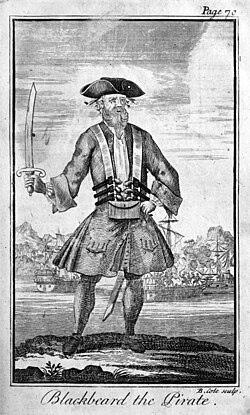
Blackbeard
Edward Teach (Thatch)
c. 1680 – 1718
The most feared pirate of his era. Commanded the Queen Anne's Revenge with 40 guns. Famously braided slow-burning fuses into his beard to appear wreathed in smoke during battle.
 💀
💀
Bartholomew Roberts
"Black Bart"
1682 – 1722
The most successful pirate of the Golden Age — captured over 400 vessels. Always dressed impeccably in red, carrying two pistols on a silk sling. Never drank rum.
 ⚔️
⚔️
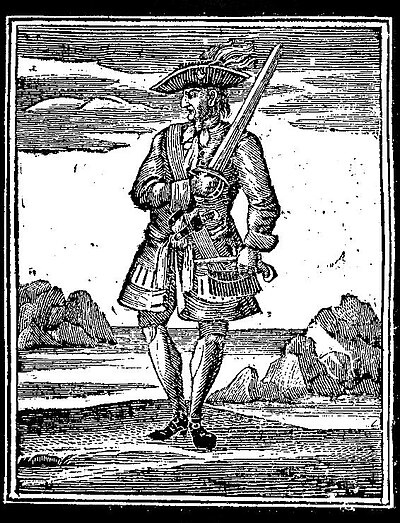
Calico Jack
John Rackham
1682 – 1720
Designed the most recognizable Jolly Roger — skull with crossed swords. Crewed alongside two of the most famous female pirates. Captured and hanged in Jamaica.
 🗡️
🗡️
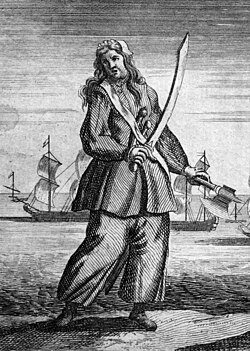
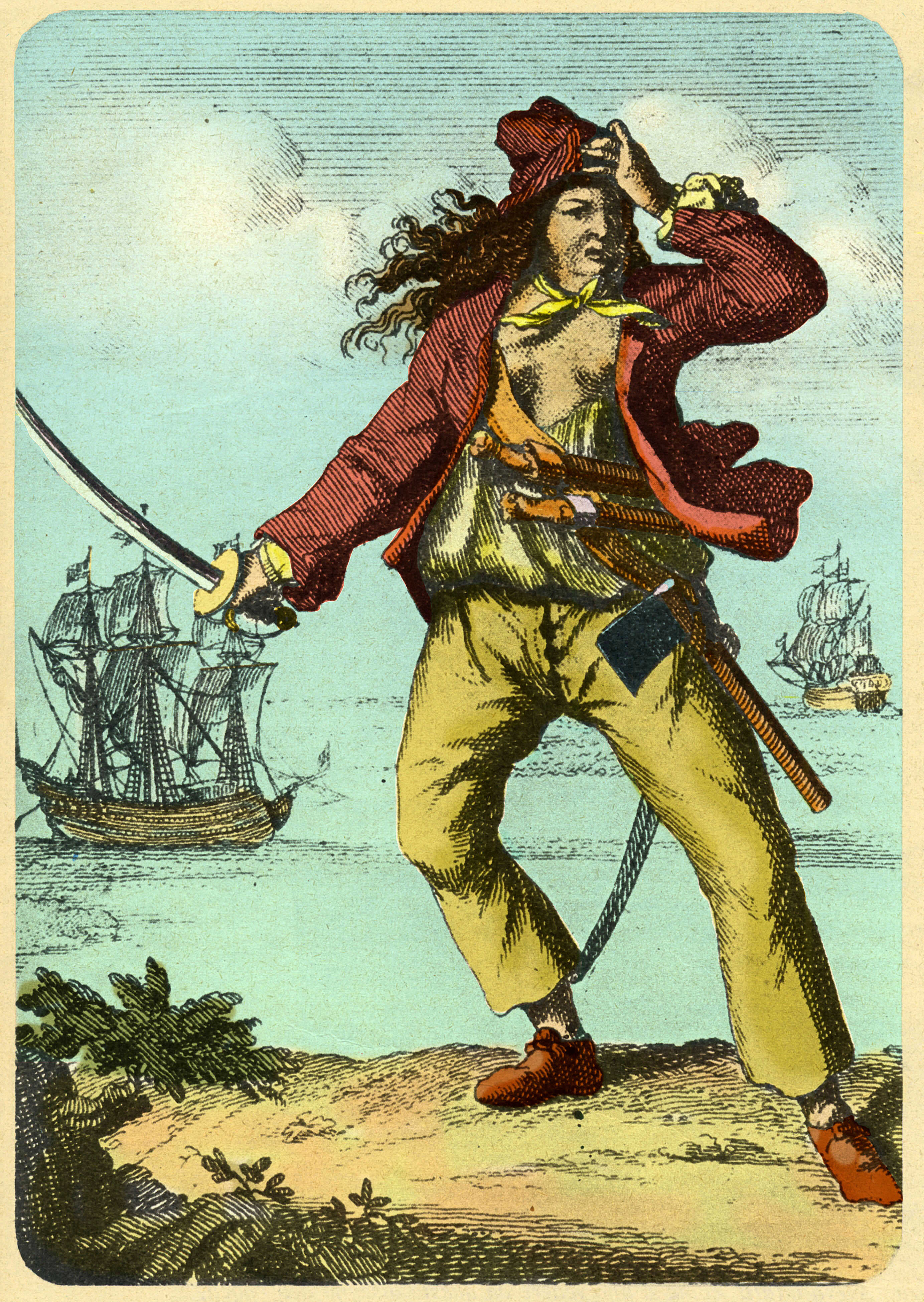
Anne Bonny
née Cormac
c. 1697 – after 1721
Disguised as a man aboard Calico Jack's sloop. One of the few women to fight as a pirate. When the crew was captured drunk, she and Mary Read were the only ones who resisted.
 ⚓
⚓
Mary Read
Mark Read (disguise)
c. 1685 – 1721
Lived as a man for much of her life, serving in the British military before turning pirate. Reportedly fought more fiercely than any man aboard when the crew was captured.
 🌊
🌊
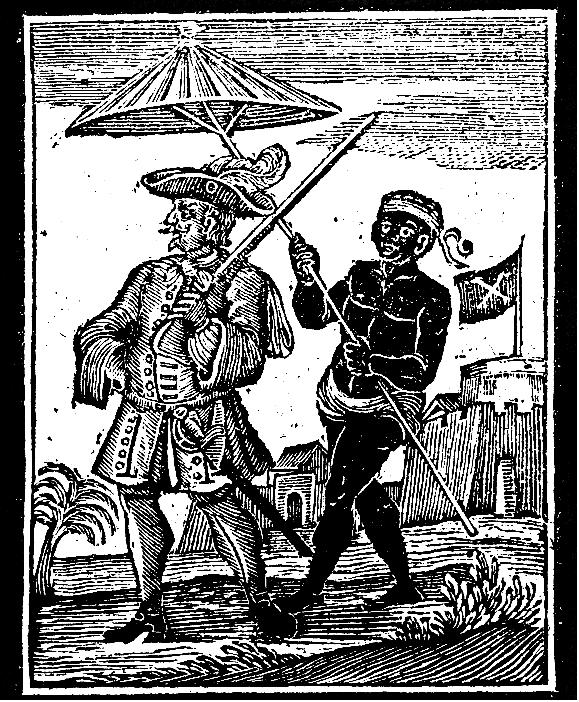
Henry Every
"Long Ben"
1659 – c. 1699
Led the most profitable pirate raid in history — seized the Mughal treasure ship Ganj-i-Sawai. The resulting diplomatic crisis nearly sparked war between England and the Mughal Empire.
 🔱
🔱
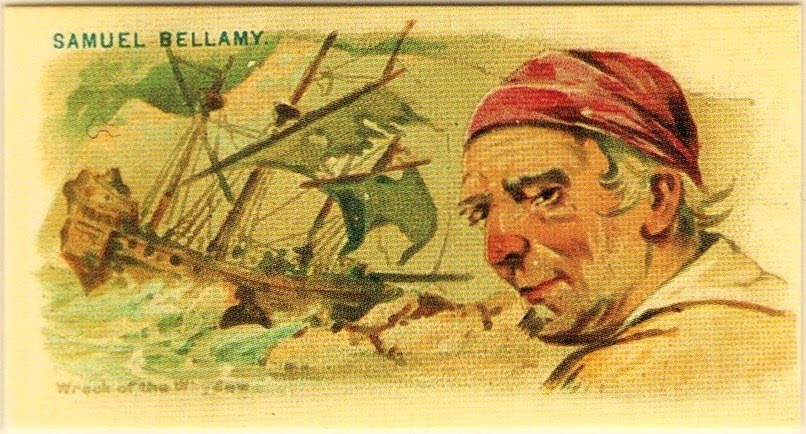
Samuel Bellamy
"Black Sam"
1689 – 1717
Called the "Robin Hood of the Sea" for his speeches about social equality. Commanded the Whydah, the richest pirate ship ever found. Drowned at 28 in a nor'easter off Cape Cod.
 🏝️
🏝️
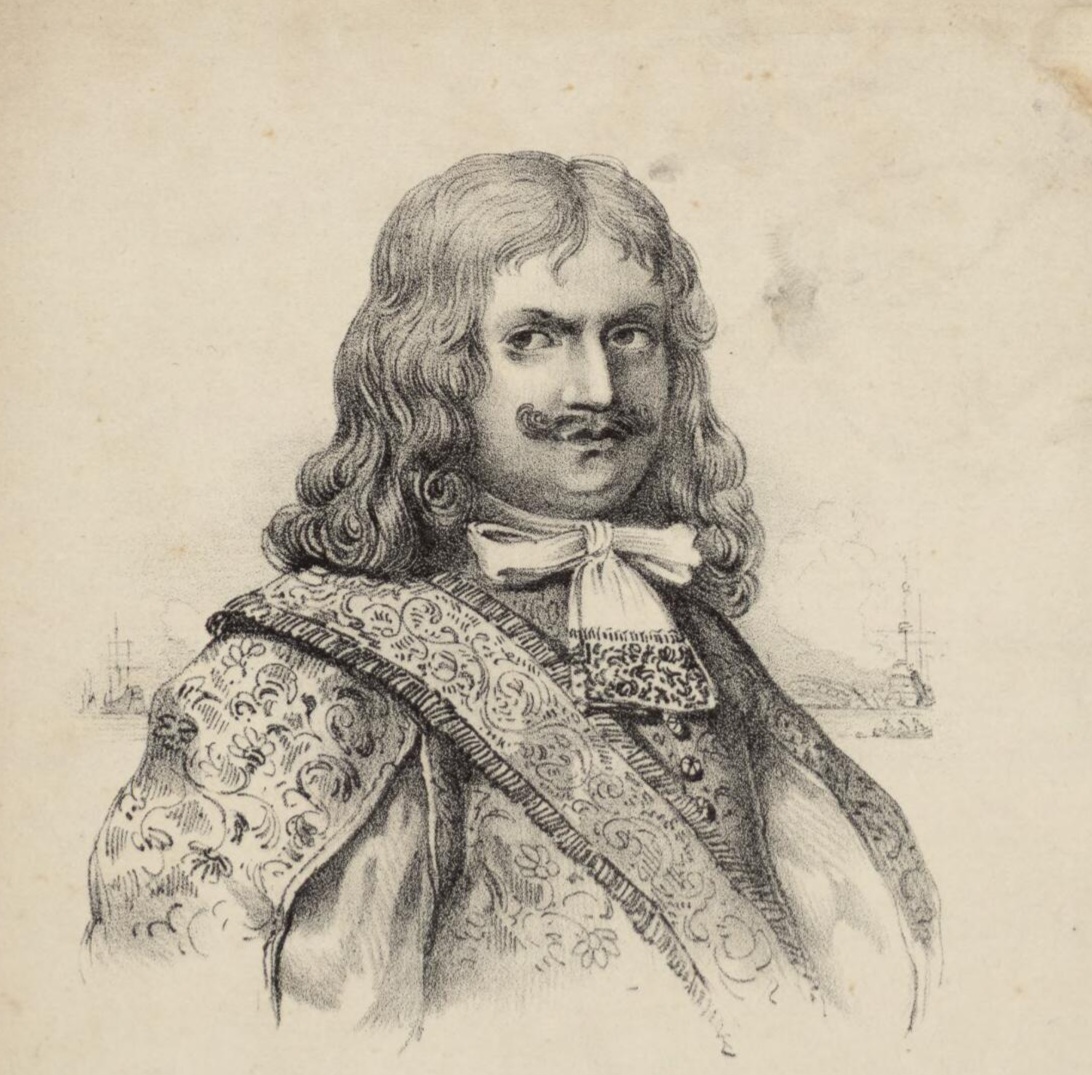
Henry Morgan
Sir Henry Morgan
1635 – 1688
Privateer who sacked Panama City in 1671. Later knighted by King Charles II and appointed Lieutenant Governor of Jamaica — ending his career as a pirate hunter, not prey.
José Gaspar — Florida's Phantom Pirate
"Gasparilla" — The Last Buccaneer who almost certainly never lived
Legendary: c. 1756 – 1821
The Legend
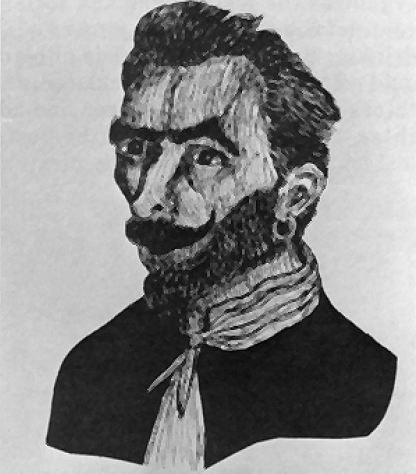
The Tale Told
According to the legend, Don José Gaspar was a Spanish naval officer who turned to piracy after a falling-out at the court of King Charles III. From a base on the SW Florida Gulf coast, he and his crew preyed on merchant shipping in the Gulf of Mexico for nearly forty years, amassing a vast hoard buried somewhere along Charlotte Harbor.
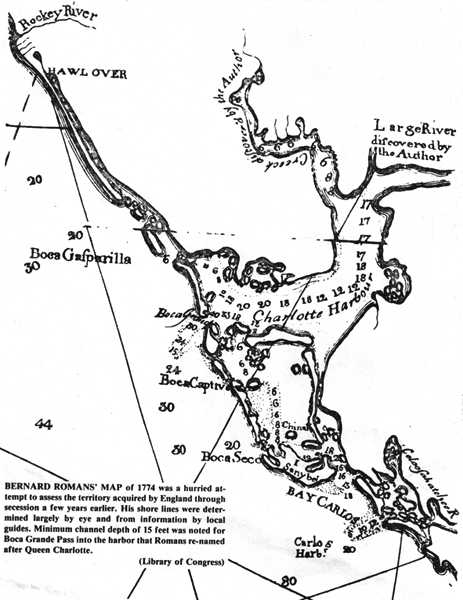
Charlotte Harbor — His Supposed Lair
A 1774 chart of Charlotte Harbor, the labyrinth of mangrove keys and shallow passes Gaspar is said to have used as his base. The names "Gasparilla Island," "Captiva," and "Sanibel" are all woven into versions of the story — though no contemporary record places Gaspar there.
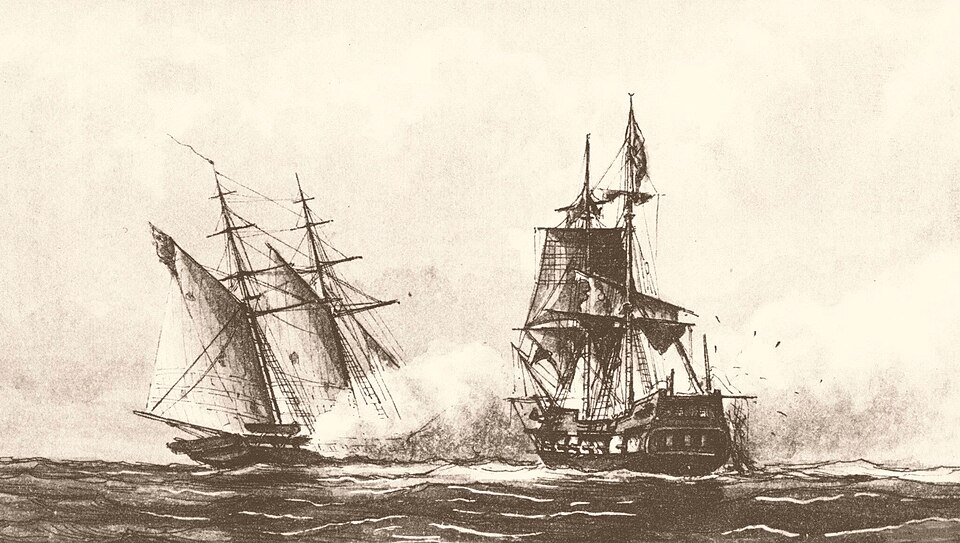
The Last Stand, 1821
In December 1821 — so the story goes — a US Navy schooner disguised as a British merchantman lured Gaspar's flagship into close range and opened fire. As his ship sank, Gaspar wrapped a length of anchor chain around his waist and leapt into the sea shouting "Gasparilla dies by his own hand, not the enemy's."
The Reality
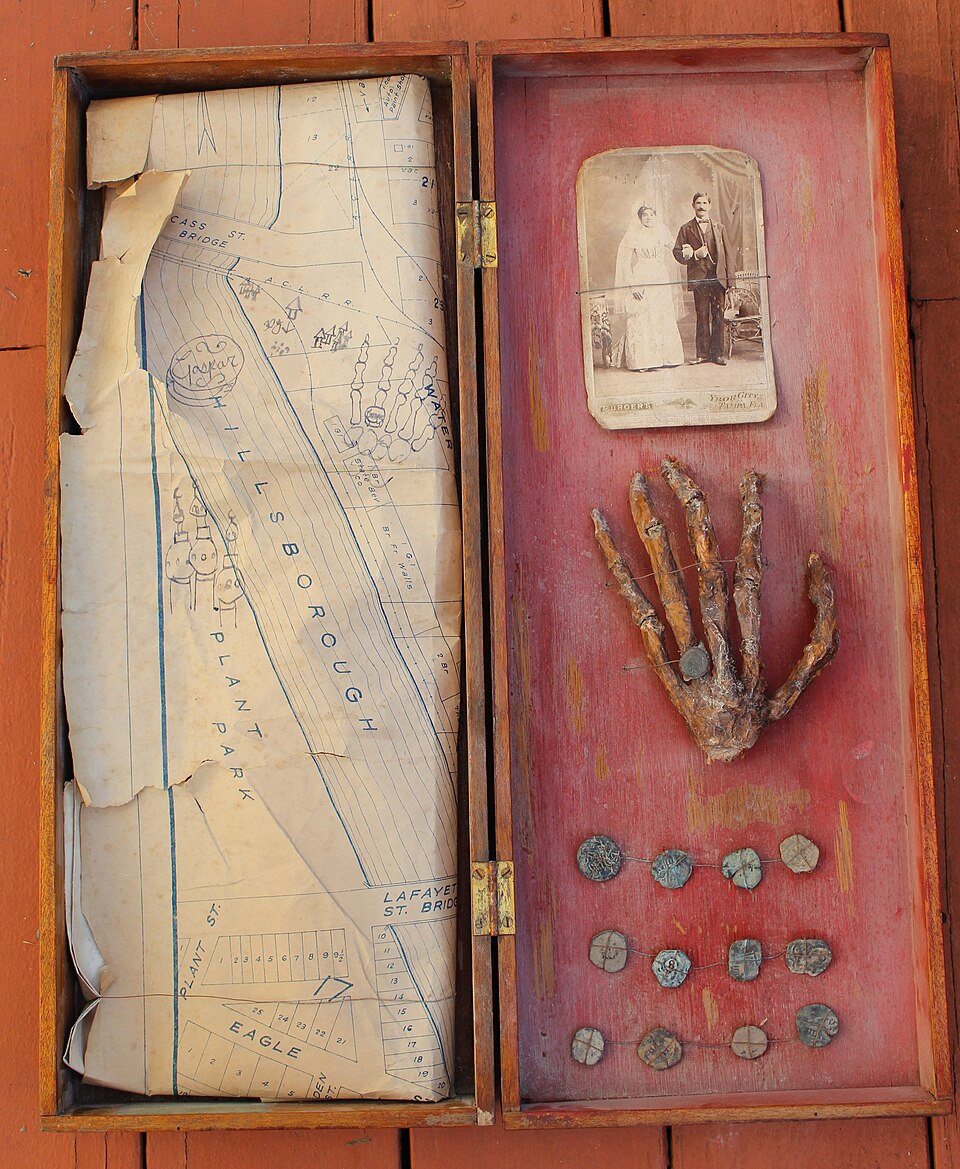
"Gasparilla, the Last of the Buccaneers" (c. 1900)
No record of José Gaspar exists in any archive — Spanish, British, or American — before about 1900. The earliest written version is this promotional pamphlet, produced by the passenger agent of the Charlotte Harbor & Northern Railway to attract tourists and land buyers to the SW Florida coast. The hand-script "biography" was the railroad's marketing copy.
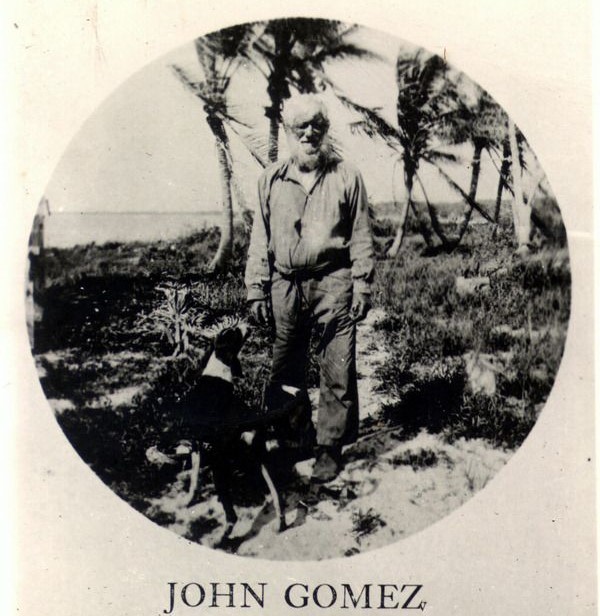
"Juan Gomez" — The Last Cabin Boy
John Gomez (c. 1778–1900), a real Portuguese hermit who lived alone on Panther Key into his 100s, claimed to be Gaspar's surviving cabin boy. He sold his story for drinks. After his death (drowned tangled in his own fishing net), the legend ballooned. He is the closest thing to a primary source — and almost certainly a fabulist.
Why the Legend Stuck
1
Real estate. The 1900s railway brochure needed romance to sell scrub-pine land. A buried-treasure pirate was the perfect lure for northern buyers stepping off the train at Boca Grande.
2
The Tampa krewes. In 1904 the city's elite formed Ye Mystic Krewe of Gasparilla and staged the first invasion parade. The story became civic identity, repeated annually until it felt true.
3
Real coast, real rogues. The Florida Gulf coast genuinely was a smuggler's haven from the 1700s through Spanish-American transition. Gaspar fits a real pattern even if he himself never sailed.
4
No counter-narrative. Florida had almost no English-language record-keeping before 1821. Easy to insert a pirate into a gap nobody could fact-check.
Modern Legacy
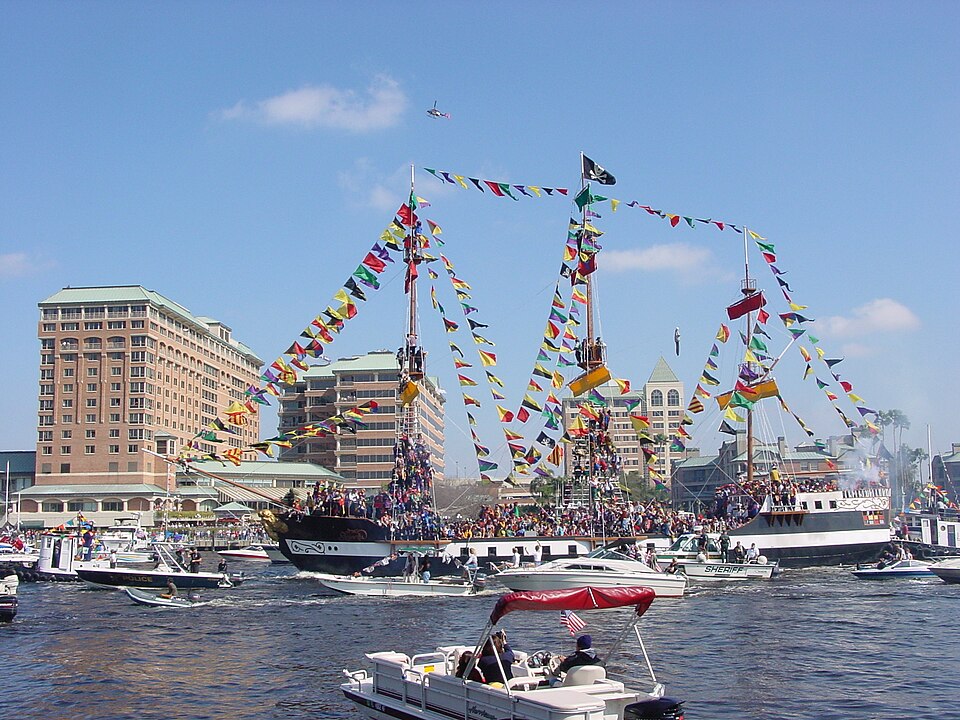
The Gasparilla Pirate Festival
Tampa's annual invasion parade has run almost continuously since 1904. The fully-rigged José Gasparilla II — built in 1954, the world's only fully-functional pirate ship of its kind — sails into Hillsborough Bay each January, fires its cannons, and "captures" the city. Hundreds of thousands attend.
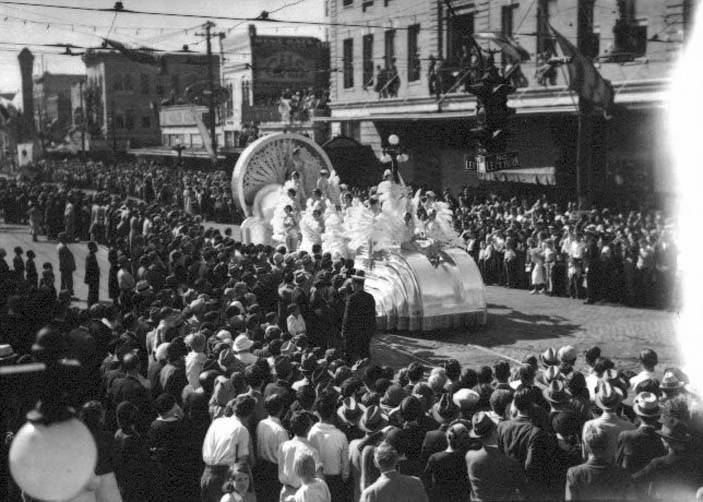
A Civic Tradition
A Gasparilla parade float, 1934. By the 1930s the festival had become Tampa's defining civic event. Ye Mystic Krewe of Gasparilla — the original krewe — now shares the streets with dozens of other costumed krewes during the season's parades and "invasions."
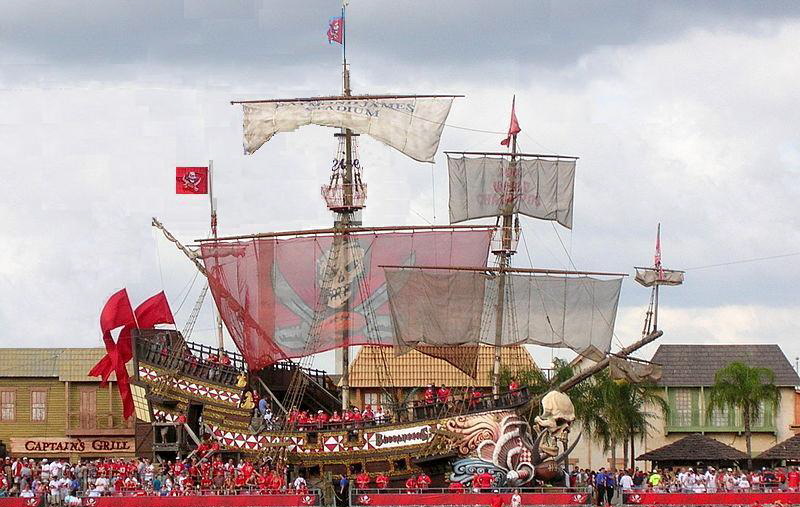
From Brochure to NFL
The Tampa Bay Buccaneers (NFL, founded 1976), Gasparilla Island, the city of Boca Grande's "Gasparilla Inn," countless local businesses, schools, streets, and parks — all carry the name. A pirate the railway invented to sell lots is now the most recognizable symbol of Florida's Gulf coast.
Timeline of an Invented Pirate
1756
"Born" in Seville
According to the legend's most-cited version, Don José Gaspar is born into Spanish nobility. No baptismal record, ship's roster, or court document confirms his existence.
1783
"Mutiny"
The story has Gaspar seizing a Spanish naval vessel and fleeing to the Florida Gulf. In real history, Spain has just retaken Florida from Britain via the Treaty of Paris — there is no Spanish navy in his supposed waters.
1821
"Death by Anchor"
The legendary final battle off Charlotte Harbor with USS Enterprise. The Enterprise's actual logs for 1821 place it nowhere near the Florida Gulf coast. No US naval engagement matching the story exists in the archive.
1900
John Gomez Drowns
The "last surviving cabin boy" dies aged ~119 (also implausible) tangled in his own fishing net off Panther Key. With no living witness left, the legend can no longer be cross-examined.
1900
The Pamphlet
"Gasparilla, the Last of the Buccaneers" — written by Charlotte Harbor & Northern Railway agent Juan Gomez (no relation, possibly named to lend authenticity) — is printed and distributed to attract land buyers. This is the legend's first written form.
1904
First Gasparilla Parade
Ye Mystic Krewe of Gasparilla stages the first mock invasion of Tampa, on horseback. The festival becomes annual; the legend is now municipal property.
1954
José Gasparilla II Launched
The current flagship of the parade — a 165-foot, fully-rigged steel pirate ship — is built specifically for the festival. It remains the only one of its kind in the world.
1976
Tampa Bay Buccaneers Found
The NFL franchise takes Gaspar's iconography as its own — a fictional pirate becomes the mascot of a multibillion-dollar sports empire.
Pirate Kit — How to Dress for Gasparilla
The Tampa invasion happens in late January — sunny, breezy, and 65–75°F. The aesthetic is Golden-Age Caribbean pirate: layered, weathered, swagger. Below is a head-to-toe inventory of what to wear and what to carry. Locals start collecting pieces months in advance. Out-of-towners grab a "starter kit" at the costume shops on N. Florida Ave.
⚓ Costume — Head to Toe
Tricorn Hat
Black wool felt, three corners pinned up. Skull-and-crossbones pin or red feather optional. Look for "Captain Hook" style at costume shops; expect to pay $25–60 for a sturdy one. Cheaper plastic versions blow off in the Bay breeze.
Bandana (alt to hat)
Red, black, or skull-printed. Tied behind the head with the knot at the back-left. Cooler than a tricorn for the long parade route. Many krewe members rotate between both during the day.
Eye Patch
Leather or black satin with elastic strap. Wear over your non-dominant eye if you want to actually see the parade. Pop-stars and beaded kids' versions abound, but a plain leather patch reads most authentic.
Gold Hoop Earring
A single large gold hoop in the left ear. The tradition: a pirate's earring was payment for his burial if he washed ashore. Clip-ons are fine. Skull-and-crossbones studs work for the second hole.
Beard / Stubble
Three weeks of "no-shave January" pays off here. Hardcore krewe members braid their beards Blackbeard-style, sometimes with ribbons or beads woven in. Stick-on beards are obvious and itch by hour two.
Poet Shirt
Loose white linen or muslin, V-neck with lace-up or ruffled front, oversized billowy sleeves with button cuffs. The single most iconic piece of the kit. Find one at any Renaissance fair vendor or thrift store; $20–50.
Waistcoat / Vest
Leather, brocade, or velvet. Brass buttons, mid-thigh length, optional skull buckles. Wear over the poet shirt. Brown or burgundy reads more authentic than pure black; gold brocade if you're playing a captain.
Long Frock Coat (optional)
Knee-length, gold trim, large brass buttons, deep pockets, wide cuffs. Beautiful but hot — most wearers carry it draped or shed it after the boat invasion. Captain-tier accessory; expect $80–200.
Sash
Bright red, gold-trimmed, or striped. Tied at the left hip with a long drape down the leg. Doubles as a place to tuck a cutlass. A 6-foot length of upholstery fabric works in a pinch.
Wide Leather Belt
3+ inches wide, large brass or skull buckle. Worn over the sash. Holds the cutlass scabbard, pistol, and (probably) the beer koozie. Don't skimp — cheap belts buckle under the weight of accessories by mid-afternoon.
Breeches or Rolled Pants
Knee-length and baggy, in brown, black, or striped canvas. If buying breeches isn't an option, roll a pair of dark cargo pants up to the knee and pair with knee-high stockings. Avoid jeans — they read as costume-store half-effort.
Knee-High Boots
Black leather, slouched or cuffed at the top, with a low heel. Buckle boots are the gold standard. You will walk 5+ miles on Bayshore — comfort matters more than authenticity here. Break them in beforehand.
⚔ Weapons & Accessories
Cutlass
Short, curved blade, basket hilt. Foam or plastic only — Tampa PD enforces the "no real weapons" rule strictly along the parade route. Tuck it in the sash or hang from the belt with a frog. ~24 inches is standard.
Flintlock Pistol
Resin or plastic replica with brass detailing. Hangs from a leather thong over the shoulder or wedged in the belt. Some have a clicking trigger; cap-firing pistols are tolerated by some krewes, banned by others.
Dagger
Small curved blade, often with a bone or wood handle. Tucked into the boot top or belt. Decorative only — no live edges. Pairs with a small leather sheath strapped to the calf.
Hook (optional)
Captain Hook–style steel hook on a leather cup that straps over the hand. Limits beer-drinking and bead-catching ability — wear only if committed. Some swap a hook for a "skeleton hand" prosthetic.
Spyglass
Brass, collapsible, 3-section telescope on a leather lanyard around the neck. Actually useful for spotting the José Gasparilla II as it rounds Davis Islands. Antique-shop finds are abundant; replicas $15–30.
Brass Compass
Working or non-working, in a brass case on a chain or lanyard. Hangs from the belt or coat pocket. Pairs visually with the spyglass. ~$10 at any maritime gift shop.
Shoulder Parrot
Velcro-mounted plush macaw — red/blue/yellow is the classic. Stays on the left shoulder so you can drink with the right hand. Animatronic versions exist but die in the salt air by hour three.
Skull Rings & Pendants
Pewter or silver, chunky and worn on multiple fingers. A skull-and-crossbones pendant on a leather cord completes the layered look. Sterling silver versions become heirlooms within Tampa pirate families.
Tankard / Flask
Pewter tankard hung from a belt clip, or a curved hip flask in a leather sleeve. Holds whatever the krewe is pouring. Many bars on Franklin St. let you drink from your own tankard — a small but real perk.
🏴☠ Gasparilla-Specific Essentials
Beads (Lots)
Krewe members on the floats and the José Gasparilla II throw beads by the truckload. Wear an empty neck and shoulders going in — you'll come out wearing 5 lbs of multi-strand plastic. Gold, purple, green, and themed krewe-specific colors.
Krewe Medallion
Worn only by initiated krewe members — Ye Mystic Krewe of Gasparilla, Krewe of the Knights of Sant' Yago, Krewe of the Royal Order of Ponce de Leon, and dozens of others. Each has its own colors, sash, and metal medallion. Don't fake one; real members notice.
Doubloons
Heavy aluminum or brass coins stamped with the year's Gasparilla theme. Thrown from floats and the flagship. Catch them off the air, never off the ground (parade-tradition unwritten rule). Collectors track yearly designs.
Loot Bag
A small canvas or burlap sack ("swag bag") slung crossbody, for ferrying caught beads and doubloons before they pile up on your neck. A pillowcase works in a pinch. Krewe-branded versions are sold along the route.
Comfortable Closed-Toe Shoes
Bayshore Boulevard is 4.5 miles of concrete, with hours of standing before the parade reaches your spot. If your knee-high boots aren't broken in, swap them out before noon. Sandals are a rookie mistake — beads land on your feet.
Sunscreen + Water
January in Florida still burns. SPF 30+, especially on the back of the neck (exposed under the bandana) and the ear-tops (exposed under the tricorn). Carry a refillable water bottle — the rum will dehydrate you faster than the sun.
Phone in a Waterproof Pouch
If you're on a boat for the invasion: salt spray, dropped phones, beer-soaked pockets. A clear waterproof pouch on a lanyard around your neck — under the poet shirt — keeps it alive and out of the way of the cutlass.
Cash
Many vendors along the route are cash-only. ATMs run dry by 1pm. Bring small bills — $50–100 in fives and tens — for food, drinks, and that one stall selling the perfect cutlass you didn't know you needed.
Famous Ships
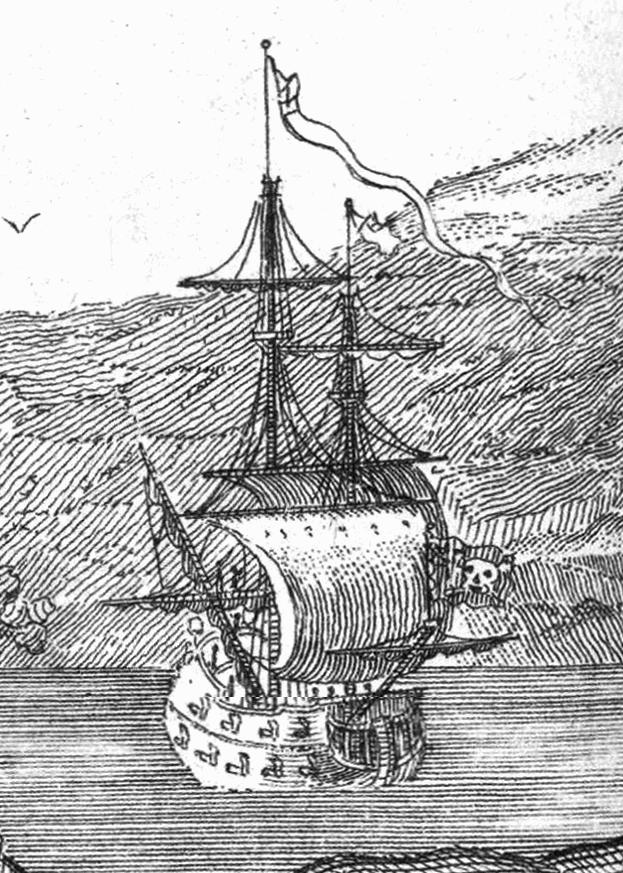
Queen Anne's Revenge
Frigate — Blackbeard's flagship
Originally a French slave ship (La Concorde). Blackbeard added 40 guns after capture in 1717. Ran aground off North Carolina in 1718. Wreck discovered in 1996.
Guns: 40
Crew: 300+
Tons: 200
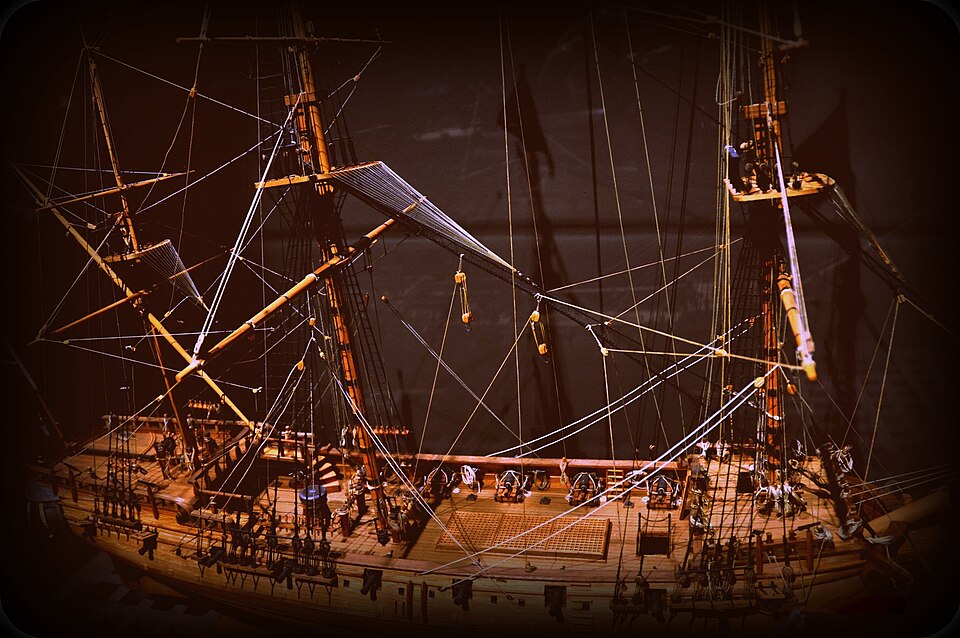
Whydah Gally
Galley — "Black Sam" Bellamy
Captured by Bellamy from a slave-trading voyage. Carried £20,000 in gold and ivory. Sunk 1717 off Cape Cod. First authenticated pirate shipwreck excavated (1984).
Guns: 28
Crew: 150
Tons: 300
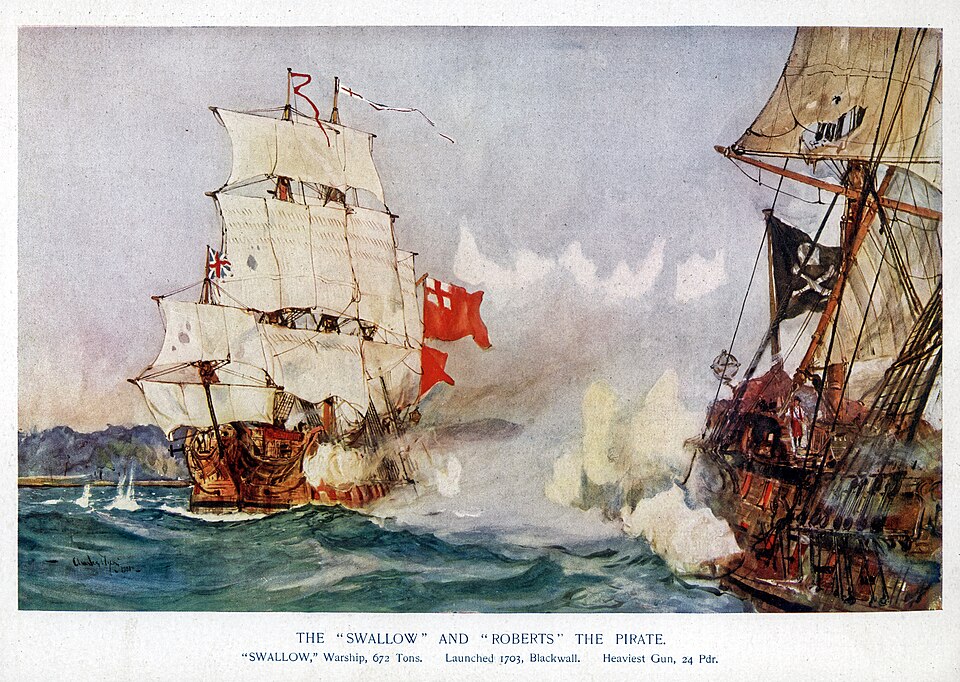
Royal Fortune
Warship — Bartholomew Roberts
Black Bart's final flagship — one of several ships he named Royal Fortune. Carried 40 guns. Defeated by HMS Swallow off West Africa in 1722, ending the Golden Age.
Guns: 40
Crew: 272
Tons: 400
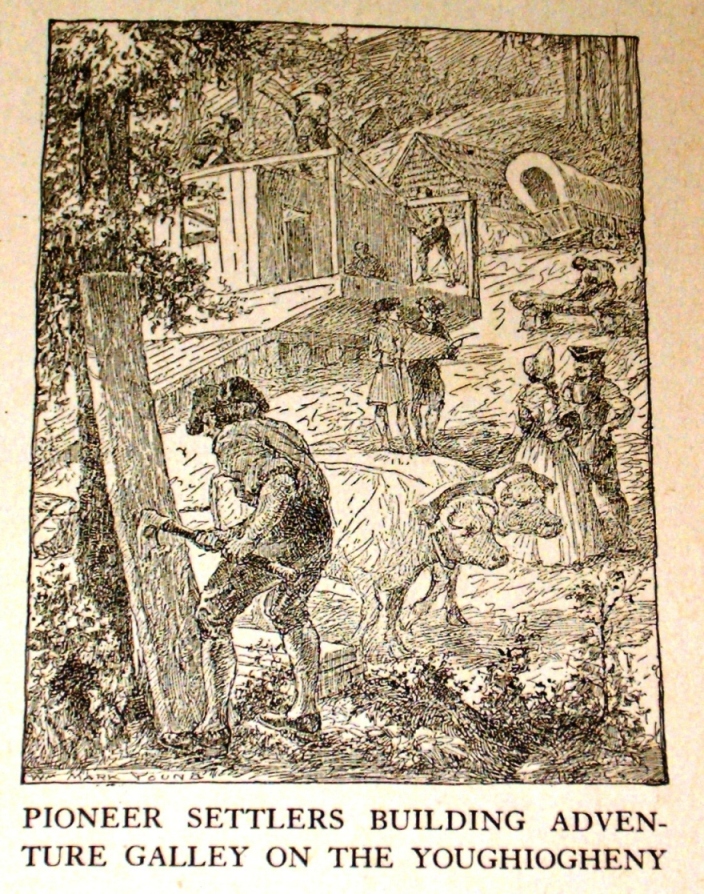
Adventure Galley
Galley — Captain Kidd
Commissioned by William Kidd as a privateer. Sailed to the Indian Ocean, captured the Quedagh Merchant, and returned home — only for Kidd to be hanged for piracy in 1701.
Guns: 34
Crew: 150
Tons: 284
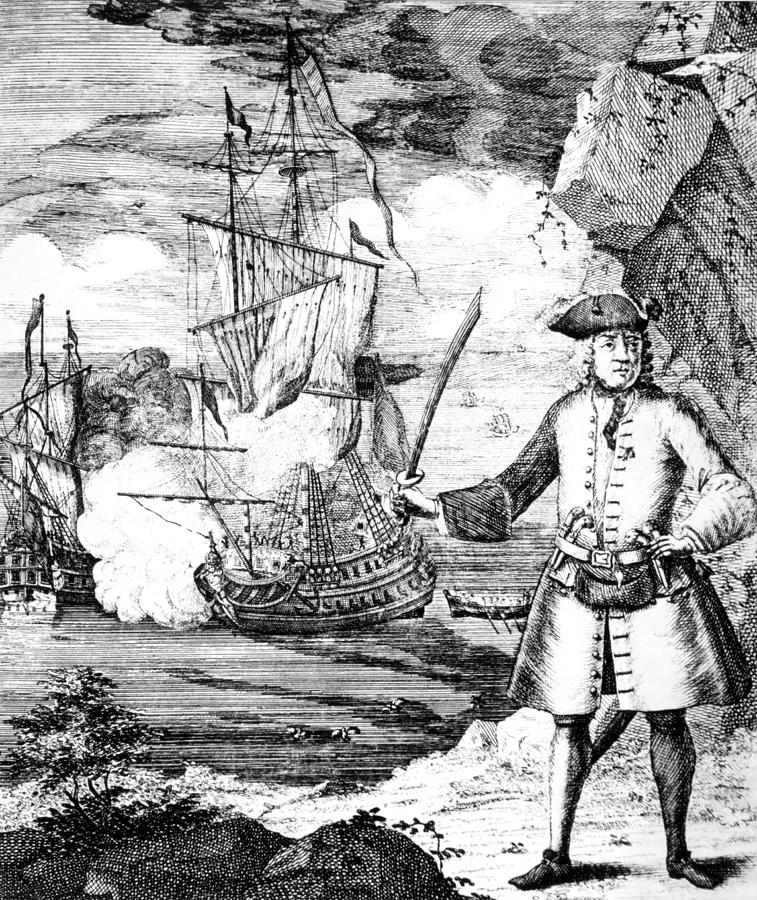
Fancy
Frigate — Henry Every
Every seized this 46-gun ship in a mutiny in 1694. The Fancy outran every navy vessel sent after it. Used to capture the Mughal treasure ship Ganj-i-Sawai in the most profitable pirate raid in history.
Guns: 46
Crew: 150
Tons: 500
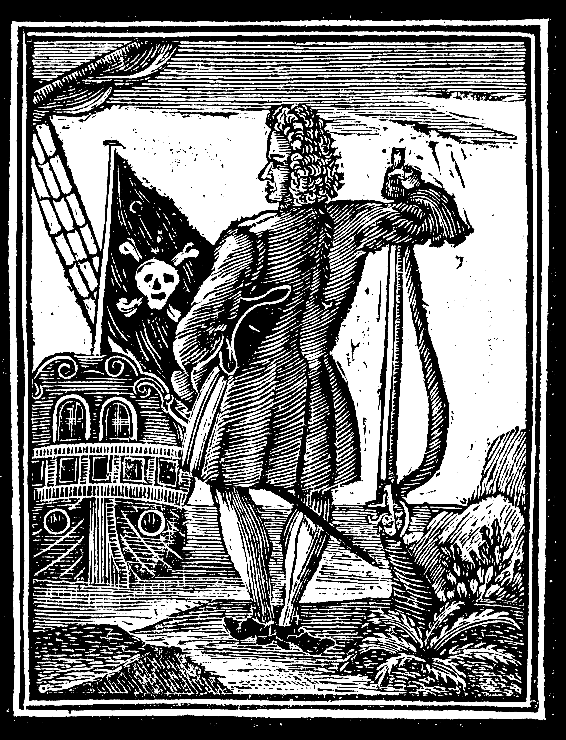
Revenge
Sloop — Stede Bonnet
Purchased outright by the "Gentleman Pirate" Stede Bonnet — the only pirate known to have bought his own ship. A 10-gun Barbadian sloop. Bonnet was captured in 1718 and hanged at Charleston.
Guns: 10
Crew: 70
Tons: 60
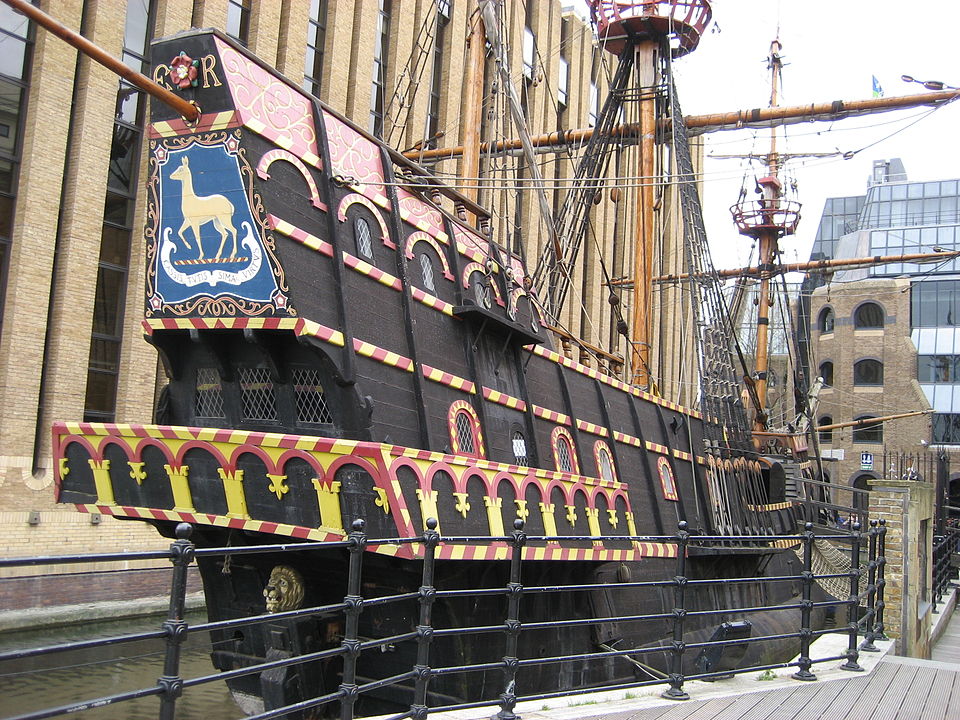
Golden Hind
Galleon — Sir Francis Drake
Drake's ship on his 1577–1580 circumnavigation of the globe. Originally named Pelican. Raided Spanish treasure ports and captured the Nuestra Señora de la Concepción. Drake was knighted aboard it by Queen Elizabeth I.
Guns: 18
Crew: 85
Tons: 120
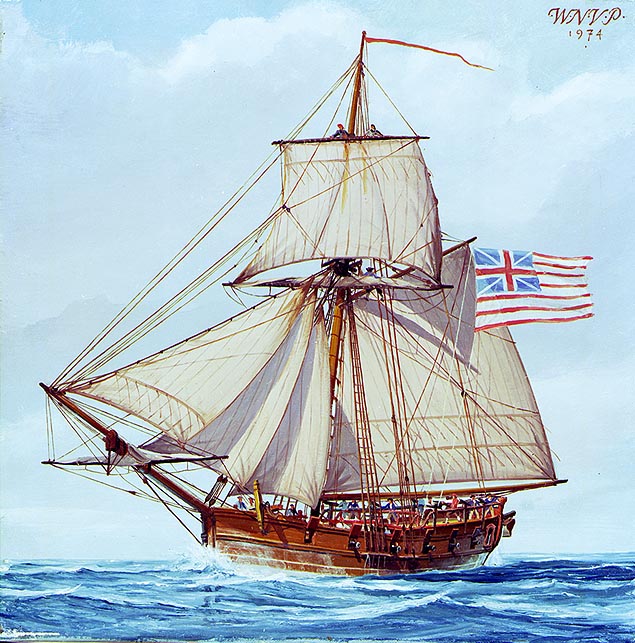
Ranger
Sloop — Calico Jack
John "Calico Jack" Rackham stole this sloop from Nassau Harbour in 1718, sailing off with his lover Anne Bonny. They cruised the Caribbean with a small crew until captured by a Jamaican pirate hunter in 1720.
Guns: 12
Crew: 40
Tons: 80
The Pirate Code (Articles of Agreement)
I
Every man shall have an equal vote in affairs of moment. Every man shall have an equal share of fresh provisions or strong liquors and shall use them at pleasure.
II
Every man shall be called fairly in turn by list on board of prizes, and keep what they get. Any man who defrauds the company to the value of even one dollar in plate, jewels or money, shall be marooned.
III
No person shall play at cards or dice for money. Lights and candles to be put out at eight o'clock at night. No striking another on board ship, but every quarrel shall be ended on shore by sword and pistol.
IV
Compensation for injury: loss of a right arm £600, left arm £500, right leg £500, left leg £400, an eye or finger £100. Pistols and cutlass shall be kept clean and fit for service.
V
No boy or woman shall be allowed amongst the company. If any man shall be found seducing the fairer sex and carrying her to sea disguised, he shall suffer death.
VI
To desert the ship or quarters in battle shall be punished with death or marooning. He that shall snap his arms or smokes tobacco in the hold without a cap to his pipe shall suffer Moses' Law — 40 stripes lacking one.
Targets & Plunder
Merchant vessels (most common)~60% of attacks
Slave ships (high-value cargo)~15% of attacks
Spanish galleons (treasure fleets)~12% of attacks
East India Company ships~8% of attacks
Naval vessels & privateers~5% of attacks
Pirate Havens & Ports
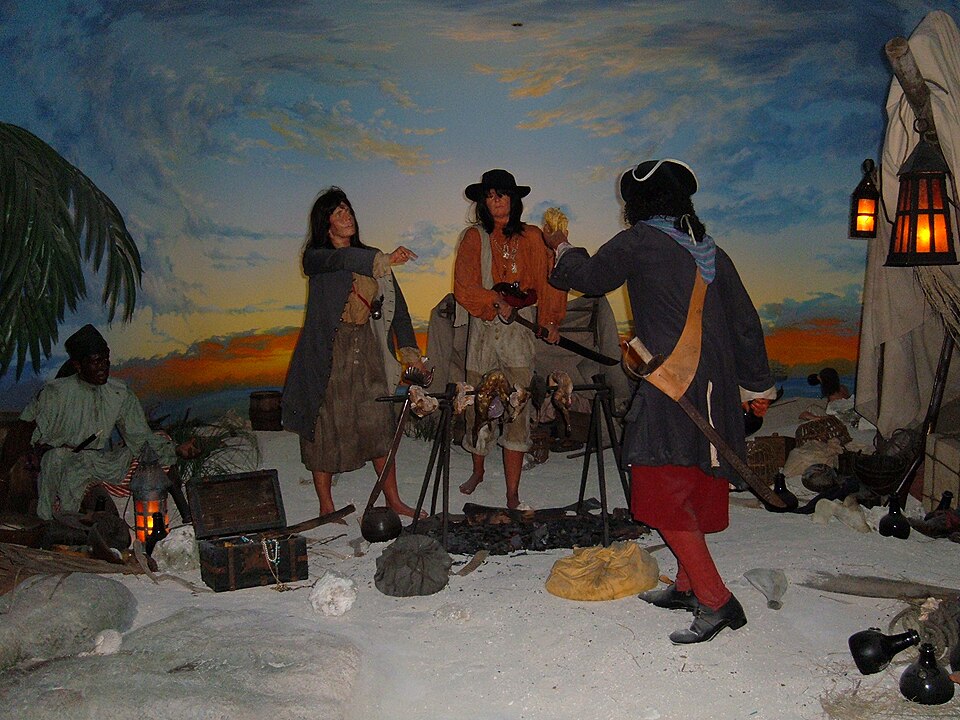
Nassau, Bahamas
Caribbean — Republic of Pirates
The unofficial pirate capital 1706–1718. Home to Blackbeard, Calico Jack, and hundreds of pirates. Governor Woodes Rogers arrived in 1718 and ended the era with pardons and hangings.
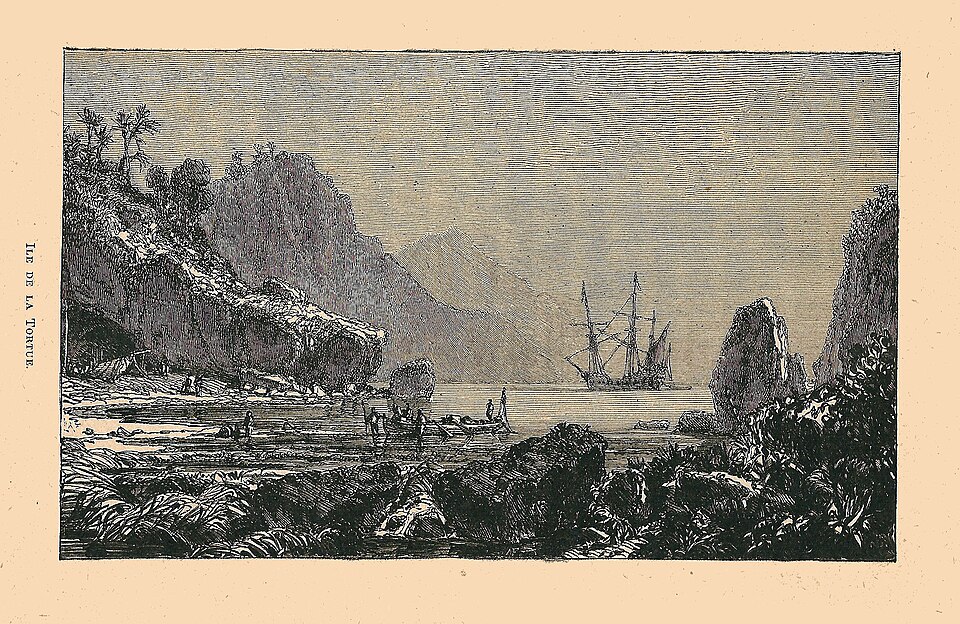
Tortuga
Hispaniola (Haiti)
The original buccaneer base in the 1630s–1650s. French-controlled island where hunters turned pirates preyed on Spanish treasure fleets passing through the Windward Passage.
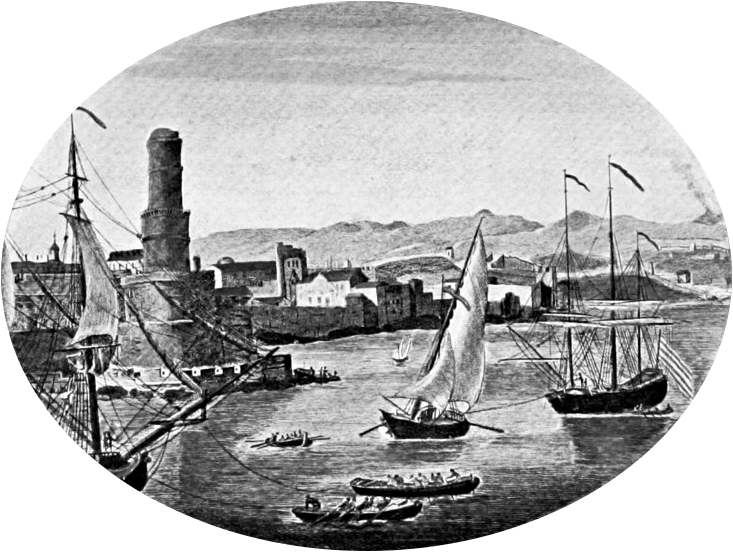
Port Royal, Jamaica
British Caribbean
Called the "wickedest city in the world." Home to Henry Morgan and licensed privateers. Devastated by earthquake in 1692, which some said was divine punishment for its debauchery.
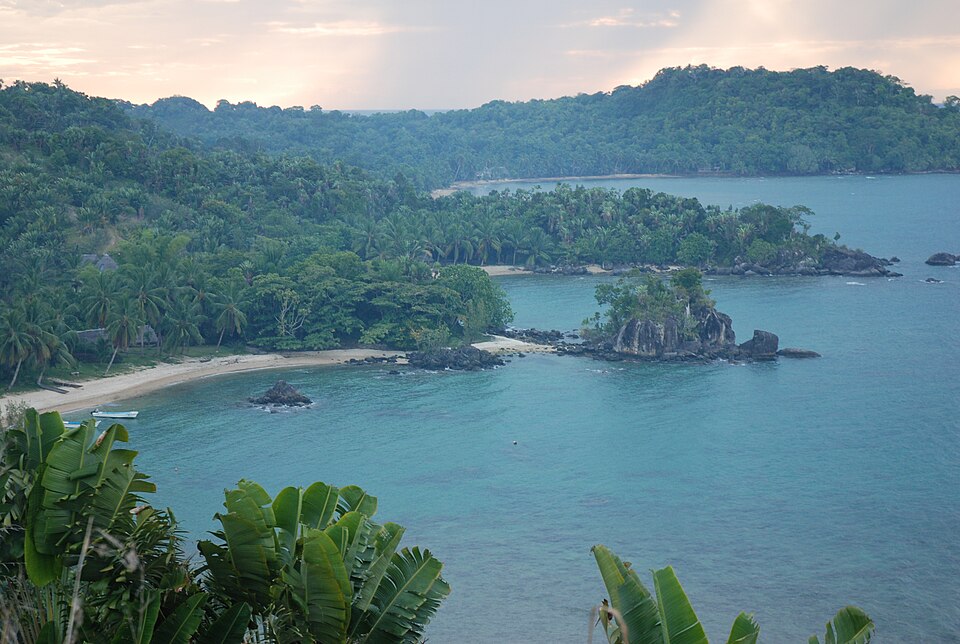
Île Sainte-Marie
Madagascar
Remote Indian Ocean base from which pirates raided Mughal treasure ships. Henry Every and Thomas Tew operated from here. Some pirates created a utopian community called Libertalia.
Battle Tactics & Weapons
False Flag
Fly a friendly nation's flag to approach prey, then raise the Jolly Roger at close range when escape is impossible.
Boarding
Preferred over sinking — grappling hooks secured the target ship, then pirates swarmed over cutlass-first. Most crews surrendered rather than fight.
Intimidation
A fearsome reputation was a weapon. Blackbeard's smoke and theatrics, Roberts' articles read aloud — psychological terror reduced resistance before a shot was fired.
Chain Shot
Two cannonballs linked by chain, fired to shred sails and rigging — disabling the target without sinking it, preserving the prize cargo.
Fire Ships
Unmanned burning vessels steered into enemy fleets. Rare but devastating — used more often as a threat than in actual combat by pirate captains.
Cutlass & Pistol
The classic pirate armament. Pistols fired once then used as clubs. Cutlasses were short, curved, ideal for tight spaces below decks during boarding actions.
Gallery — Pirates of the Golden Age
Blackbeard (Edward Teach)
A 1724 depiction of Blackbeard from "A General History of the Pyrates." He commanded the Queen Anne's Revenge and was feared across the Caribbean and American colonies.
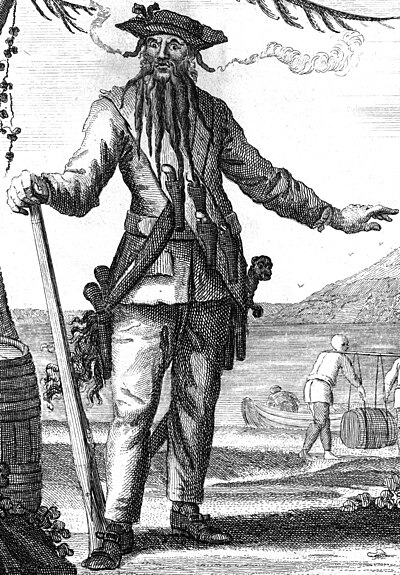
Blackbeard Portrait
A 1736 engraving commonly identified as Blackbeard (Edward Teach/Thatch). He famously braided slow-burning fuses into his beard to appear wreathed in smoke and fire during battle.
The Battle of Ocracoke, 1718
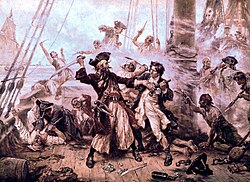
Jean Leon Gerome Ferris' dramatic 1920 painting of the final battle between Blackbeard and Lt. Robert Maynard at Ocracoke Inlet, North Carolina.
Anne Bonny
A 1724 portrait of Anne Bonny, one of the most famous female pirates. She sailed with Calico Jack Rackham and reportedly fought fiercely when their crew was captured.
Calico Jack (John Rackham)
A 1724 woodcut of John "Calico Jack" Rackham, who designed the most recognizable Jolly Roger skull-and-crossswords flag. Hanged in Jamaica in 1720.
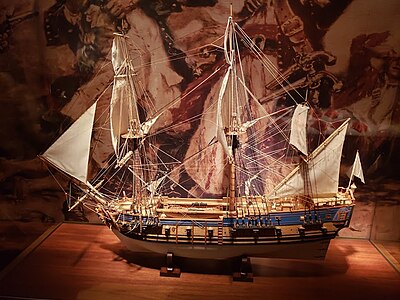
Queen Anne's Revenge
A museum model of Blackbeard's flagship — originally the French slave ship La Concorde, captured in 1717 and converted to a 40-gun warship. Its wreck was discovered off North Carolina in 1996.
Caribbean Pirate Havens — c. 1700
Pirate Haven
Spanish Port (target)
Notable Battle / Incident
Click a location on the map
Select any marked haven or hotspot to learn more about its role in the Golden Age of Piracy.
Timeline of the Golden Age
1630s
Buccaneers Emerge
French hunters on Hispaniola begin raiding Spanish ships from Tortuga. The term "boucanier" (from smoking meat on a boucan) enters the vocabulary.
1668
Morgan Sacks Portobelo
Henry Morgan leads 400 buccaneers in a devastating raid on the Spanish silver port of Portobelo, Panama — netting 100,000 pieces of eight.
1695
Henry Every Strikes
Every captures the Ganj-i-Sawai, Mughal Emperor Aurangzeb's personal treasure ship. The haul of £600,000 triggers the first international manhunt in history.
1701
Captain Kidd Hanged
William Kidd, who sailed as a privateer, is hanged at Execution Dock, Wapping. His body is left in a gibbet over the Thames as a warning to pirates.
1706
Nassau Becomes Pirate Haven
With Britain and Spain at war, Nassau in the Bahamas becomes an ungoverned free port. Hundreds of pirates make it their base over the next decade.
1717
Whydah Sinks
Samuel Bellamy's prize ship, the richest pirate vessel in the Atlantic, sinks in a storm off Cape Cod. Only 2 of 144 crew survive. Bellamy dies at 28.
1718
Blackbeard Killed
Lieutenant Robert Maynard ambushes Blackbeard at Ocracoke Inlet, North Carolina. Blackbeard receives five bullet wounds and over twenty sword cuts before dying. His head is hung from the bowsprit.
1718
Woodes Rogers Arrives
The new Governor of the Bahamas offers a royal pardon. Many accept. Those who refuse are hanged. Nassau's pirate era ends. Rogers' motto: "Expulsis Piratis — Restituta Commercia."
1722
Black Bart Killed
Bartholomew Roberts is killed by grapeshot from HMS Swallow off West Africa, ending the most prolific pirate career of the era. 52 of his crew are hanged — the largest mass piracy execution in history.